Rhythmic Communication: How Caterpillars Manipulate Ants with Vibrations
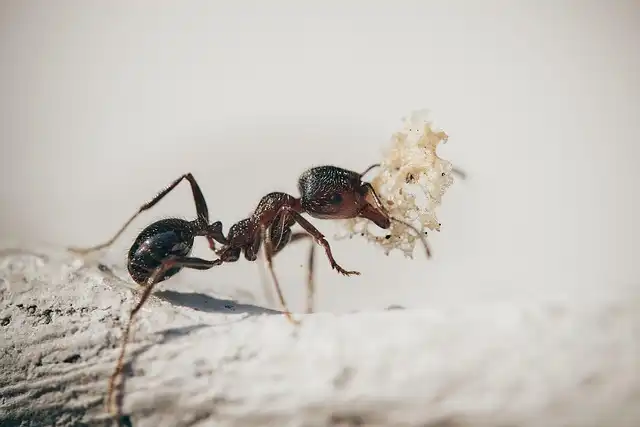
Caterpillars use complex rhythmic vibrations to mimic ants, integrating into their colonies for food and protection. This precise rhythmic language, matching ant patterns, suggests that maintaining a beat may be a more widespread communication method in the animal kingdom than previously thought.
These larvae have actually advanced close connections with ants, including sidewalk ants, in the genus Tetramorium, and those in the genus Myrmica. Some caterpillars receive food or security from ants; others are totally thought about ant brood and taken on into the nest. These caterpillars can then manipulate the nest, feeding on ant larvae.
Rhythmic Harmony: Caterpillars & Ants
Both caterpillars and ants shook with a normal pattern, similar to the ticking of a metronome, she claims. Just the caterpillars most dependent upon ants can produce balanced patterns that matched the ants’ intricacy– consisting of keeping even pauses between pulses and an alternating pattern of long and short rooms. This precise rhythmic language may be essential for forming a close partnership with the ants.
She and her colleagues collected 9 caterpillar species and the swarms of two ant types from across North Italy. The scientists categorized the caterpillars as varying from no connection with ants to very myrmecophilous– a parasite absolutely reliant on ants for survival.
We are at an important time and supporting scientific research journalism
is more crucial than ever. Scientific research News and our
parent company, the Culture for Scientific research, need your help to reinforce
scientific proficiency and make certain that vital social decisions are made
with science in mind.
Both caterpillars and ants vibrated with a regular pattern, much like the ticking of a metronome, she claims. Only the caterpillars most reliant upon ants can produce balanced patterns that matched the ants’ complexity– consisting of keeping even stops in between pulses and an alternating pattern of lengthy and short spaces.
Jake Buehler is a freelance science writer, covering nature, wildlife preservation and Planet’s fantastic biodiversity, from salamanders to sequoias. He has a master’s level in zoology from the College of Hawaii at Manoa.
Scientific Inquiry into Insect Vibrations
Making use of sensitive microphones, the team taped and evaluated the little resonances the caterpillars and ants made that taken a trip with materials such as dirt. That supplied a close look at the pace and consistency of the buzzing signals.
Luan Dias Lima, an entomologist at the University of São Paulo in Brazil, has an interest in seeing a similar research on metalmark butterflies. Their caterpillars independently advanced close partnerships with ants, so contrasting the two butterfly families could expose if there’s a “international universal rhythm” for ant-butterfly interactions.
Unlocking Rhythm’s Broad Animal Role
By jerking like a cellular phone receiving a phone call while on vibrate, the caterpillars cozy up to ants, gaining benefits for them both. The findings, published February 25 in the Annals of the New York Academy of Sciences, suggest that the capability to maintain a beat may be extra widespread in the pet kingdom than researchers believed.
De Gregorio assumes the ants were already utilizing these resonances for their own interaction demands. Caterpillars that could tap into that system “would receive even more focus and care from the ants,” she states.
De Gregorio says that the level of rhythmic intricacy of this pest interaction is especially remarkable to her, especially as someone who studies primates. Primates have really innovative brains, yet the generation and acknowledgment of rhythm is still unusual among them, discovered just in a handful of types like humans, indri lemurs and gibbons. The butterfly findings might imply that keeping a beat might be something basic for communication and even more widespread among pets than idea.
These larvae have actually advanced close relationships with ants, including pavement ants, in the category Tetramorium, and those in the genus Myrmica. Some caterpillars get food or defense from ants; others are totally thought about ant brood and taken on into the nest.
Scientific research News was established in 1921 as an independent, not-for-profit source of accurate details on the latest news of medicine, innovation and science. Today, our objective remains the exact same: to empower people to examine the information and the world around them. It is published by the Culture for Science, a not-for-profit 501(c)( 3) membership company dedicated to public interaction in scientific research and education and learning (EIN 53-0196483).
The caterpillars sometimes mimic the ants’ chemical cues to befriend them, settling their hosts with sugary excretions. Yet research had hinted that some caterpillars were duplicating the method ant queens shake to connect with their nest, states Chiara De Gregorio, an ethologist at the College of Warwick in England.
1 animal behavior2 Ant colony manipulation
3 Caterpillar ant interaction
4 Insect vibrations
5 Myrmecophilous larvae
6 Rhythmic communication
« Saving Lives: The 2024 Progress Toward No-Kill Animal SheltersSacrificial Love: Wood-Feeding Cockroaches Eat Each Other’s Wings to Bond »