
New Monkey Species Discovered in Congo
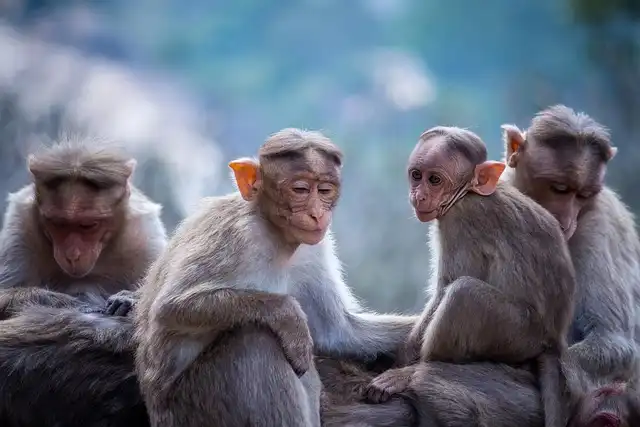
A new monkey species, Colobus congoensis, has been identified in the Democratic Republic of Congo after years of research. The discovery highlights the importance of environmental journalism and scientific research.
Scientific Research and Environmental Importance
We go to an important time and supporting environment journalism is more important than ever before. Scientific research News and our parent organization, the Culture for Scientific research, require your assistance to reinforce environmental proficiency and ensure that our action to climate modification is educated by scientific research.
Scientific research Information was established in 1921 as an independent, not-for-profit source of accurate details on the current news of modern technology, medicine and scientific research. Today, our mission remains the same: to encourage people to evaluate the news and the globe around them. It is published by the Culture for Scientific research, a not-for-profit 501(c)( 3) membership company devoted to public interaction in clinical study and education and learning (EIN 53-0196483).
The Mystery Ape of Congo
High in the forested canopy of Democratic Republic of Congo, an all-black ape turned its back to a photographer’s video camera. The partial photo taken in 2008 disclosed little more than the monkey’s dark coat and part of its tail. Over the next numerous years, Amboko and his coworkers returned to the dense, closed-canopy forest, where the mystery ape shared its range with 7 other monkey types and bonobos.
Over the following a number of years, Amboko and his coworkers went back to the dense, closed-canopy forest, where the secret ape shared its range with 7 other monkey types and bonobos. From 2018 to 2022, the team logged loads of sightings, noting a distinct orange patch around the monkey’s mouth, and recorded the primate’s deep, distinctive barks. The team likewise researched heads from primate carcasses confiscated by the Congolese parks and nature authority.
High in the forested cover of Democratic Republic of Congo, an all-black ape turned its back to a photographer’s camera. The partial photo absorbed 2008 disclosed little greater than the ape’s dark coat and component of its tail. It was enough to get Junior Amboko, a biological primatologist at Florida Atlantic College in Boca Raton, and various other scientists asking yourself if the image exposed a varieties unknown to scientific research.
Conservation Concerns for New Species
Alexander Georgiev, a primate environmentalist at Bangor College in Wales not associated with the research study, states researchers must prioritize studying the dangers encountering the brand-new types and deal with neighborhood communities to secure C. congoensis’ environment.
Confirmation of a New Species
Genetic proof eventually confirmed that the ape represented a distinct family tree that had split from C. satanas a minimum of 4 million years earlier. The ape was, as a matter of fact, a brand-new species, to science making the name Colobus congoensis, Amboko and coworkers report July 15 in PLOS ONE.
“Based on the coat shade, we knew [the ape] belonged to the genus Colobus,” claims Julia Arenson, a transformative biologist with Yale University. “And my impression of the head was that it was extremely comparable to Colobus satanas yet a lot smaller sized.”
“New primates are rare for science,” claims zoologist and primate guardian Tim Davenport, the Africa supervisor of the conservation group Re: wild. When brand-new varieties are discovered, it’s only in “remote, challenging and understudied” areas, he states.
1 animal conservation2 Congo
3 monkey sounds
4 new species
5 primatology
6 Scientific Discovery
« Toxins Accelerate Dolphin Aging, Mirroring Human Health RisksWildfire Devastation: Impact on Wildlife and Pets »